

Effective communication in healthcare is the foundation of safe, compassionate and person-centred care. In fact, being able to communicate well is a prerequisite in a healthcare environment.
Clear exchange of information between clinicians, patients and families helps a lot in several areas. It helps improve diagnostic accuracy, treatment adherence rises, and the risk of adverse events drops dramatically.
Every interaction matters, especially in a sector where a single misunderstood instruction can have life-altering consequences. The NHS Patient Safety Strategy highlights that communication breakdowns are among the most common contributory factors in serious incidents.
In healthcare practice, communication breakdowns emphasise the need for a systematic approach to how people speak. It also underscores how we listen and document within care environments.
The challenge is magnified in health and social care settings such as hospitals, GP surgeries and supported living accommodations. This is where individuals may have cognitive impairments, sensory loss or complex long-term conditions.
Role of communication in healthcare
The importance of effective communication in healthcare can not be disregarded. As a matter of fact, effective communication is like a clinical intervention that directly shapes safety, experience and outcomes.
In healthcare, staff must navigate multidisciplinary handovers and relay sensitive information to anxious relatives. Also, there is a need to interpret non-verbal cues from service users who cannot articulate their needs verbally.
Effective and clear communication is good for handover, care plan discussion and family conversation. In short, communication is essential in settings such as acute hospitals, community clinics and supported living environments.
Communication carries the potential to either avert harm or seed misunderstanding. In most cases, the quality of dialogue defines the quality of care. Recognising this, regulators and professional bodies now treat communication breakdown as a systemic risk. Therefore, it demands structured, evidence-based attention.
As a healthcare worker, your ability to pick up on subtle changes in a resident’s demeanour is vital. It can be the difference between early intervention and a preventable crisis. These realities demand that communication be treated as a clinical competency that requires deliberate practice and the right tools.
No doubt, technology is increasingly bridging communication gaps. Nowadays, assistive devices designed with healthcare in mind can reinforce human interaction rather than replace it.
See Also: How to Select the Right Home Care Agency for Your Loved Ones

Strategies for better communication in healthcare
Communication is the connective tissue that holds health and social care teams together. It enables shared situational awareness, clear allocation of responsibility and timely decision-making under pressure. However, the complexity of modern health and social care makes communication particularly fragile.
This is why some people believe that better communication is vital to become a successful leader in healthcare administration. In healthcare settings, a single patient journey usually involves general practitioners, hospital consultants, and therapists. This may involve social workers and care staff who work for different organisations using incompatible record systems.
In supported living services, individuals with learning disabilities often communicate via behaviour and words. This requires carers to be keen observers and understand the non-verbal cues to effectively respond to their needs.
Communication must be personalised, verified for understanding, and repeated patiently in health and social care. One cannot assume that a message sent is a message understood; this can be dangerously misleading in clinical practice.
Effective communication means colleagues will be able to listen actively, raise concerns without fear and document accurately. This helps catch errors early, and workload stress is distributed more evenly. Below are some of the best strategies for better communication in healthcare settings:
#1]. Adopt structured handover tools
Frameworks such as SBAR (Situation, Background, Assessment, Recommendation) help create a shared mental model. Also, it helps reduce the risk of omitting critical information during shift changes or referrals.
#2]. Practise active listening
Being able to practise active listening is also important when it comes to communication in healthcare settings. Active listening is all about giving the speaker undivided attention without interrupting or planning your response.
Moreover, it also involves observing non-verbal cues, validating their emotions, and showing understanding. This means focusing fully on the speaker, avoid interrupting, and summarise what you have heard. This validates the other person and catches misunderstandings before they escalate.
#3]. Use plain, jargon-free language
Using jargon-free language is probably one of the most effective communication strategies. It involves using clear, simple, and everyday words instead of technical terms, acronyms, or industry-specific buzzwords. This helps to ensure an easy-to-understand message that is concise and inclusive for anyone.
The fact is that medical terminologies can intimidate patients and confuse colleagues from different disciplines. Therefore, it’s advisable to replace “hypertension” with “high blood pressure” when speaking with service users unless they indicate otherwise.
#4]. Teach-back technique
The teach-back technique is another good communication strategy that can be used in healthcare settings. It involves asking someone to restate or demonstrate in their own words the information or instructions you just provided.
In short, after explaining a care plan or medication change, ask the person to explain it back in their own words. It is used to confirm comprehension and catch misunderstandings early. It ensures the message is clearly explained and genuinely understood, rather than testing the listener’s memory.
#5]. Close the loop on concerns
Simply put, closing the loop on concerns is all about following up with individuals who have raised an issue to acknowledge their input. Moreover, it also involves resolving the problem and informing them of the outcome.
This means when a colleague or patient raises a worry, acknowledge it, act on it and feed back the outcome. It helps build trust, boosts retention, and prevents the same issues from happening again. Unclosed loops corrode trust rapidly.
#6]. Leverage communication passports
A communication passport is a personalised portable document particularly valuable in supported living services. It explains how a person communicates, what they need to express themselves, and how others can support them.
It helps service users to share vital information about their personality, routines, likes, and dislikes. Consequently, this helps bridge communication gaps between individuals with complex needs and their carers.

#7]. Optimise written and digital records
Optimise written and digital records, write contemporaneously, avoid ambiguous abbreviations and highlight actions clearly. The fact is that well-kept records are a communication tool for the whole team across time.
#8]. Champion multidisciplinary rounds
This involves leading a collaborative care team to align on patient goals, treatment plans, and discharge strategies. Short, focused meetings that include nursing, medical, therapy and social care staff ensure everyone works from the same information and respects each other’s contribution.
#9]. Invest in non-verbal awareness
Investing in non-verbal awareness is another one of the communication strategies that can work in healthcare settings. Posture, eye contact, tone and even silence can convey powerful messages.
Staff should be trained to read distress or discomfort that words may not reveal, especially in health and social care contexts.
#10]. Embed regular reflective practice
Reflective practice involves debriefing the team after significant events — both positive and challenging — happen. This allows patterns of communication to be examined, learning to be distilled and relationships to be repaired.
Conclusion
In this article, we talked about how communication in healthcare is far more than a conversational nicety. Every healthcare setting must treat communication with the same rigour it applies to infection control or medication management.
The strategies outlined above provide a practical toolkit that can be adapted to any health and social care environment. Structured handover tools, active listening and teach-back techniques address immediate interaction quality.
However, communication passports and reflective practice acknowledge the deeper, often unspoken, dimensions of person-centred care. Taken together, they move practice away from a culture of assumption to verification and empathy.
In this context, workplace communication is not simply about exchanging data. As a matter of fact, it is more about building the psychological safety that enables staff to speak up. It also helps staff share ideas and admit uncertainty without blame.
When organisations deliberately foster such an environment, they unlock discretionary effort, reduce burnout and create a resilient workforce capable of delivering consistently compassionate care. The essence of communication in the workplace is therefore cultural as much as technical.
Ultimately, better communication is an ongoing journey rather than a one-off training topic. It requires leadership commitment, regular skill refreshment and systems that make the right conversation easy to have.
Health and social care providers have both an ethical obligation and a practical incentive to embed these strategies deeply. In doing so, they’ll meet regulatory standards. Also, they will be able to honour the fundamental human connection that lies at the heart of all care.
PLEASE SHARE ON PINTEREST







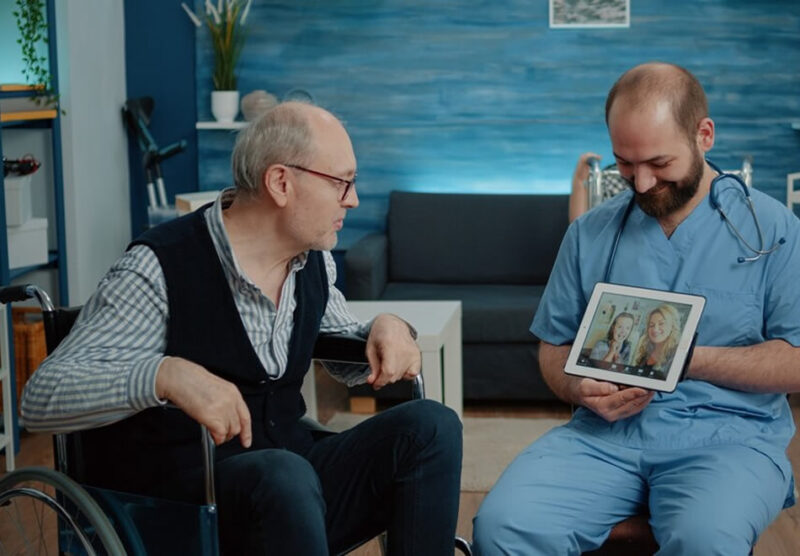

10 Strategies for Better Communication in Healthcare Settings